Jan 14, 2008

The Fall

.
Frozen in cold agony and
Drowning in guilt,
Horrid tears blur his sight as he falls
From the tower of pride,
His mighty hands had built.

Erosion devours this mind of exception.
Dissolved in fading colours
His soul whispers of insane,
Yearning for a blade, erupted
From gluttonous fire
To scrape off the turgid shame.

Laughter and nothing but laughter.
In disbelief he shakes his head,
“Will this flight be my last?”
Crushed by the weight of sin
Flesh becomes one with the dirt
As lifeless arms stretch out to the dead.

“When did the wisdom of giants,
Become a mad man’s joke!”
Dwelling amongst beasts,
Dreaming of angels.
His rotting mouth mumbles a prayer
Hoping
Heavenly mercies to evoke.

The light of the sun made by his Father
Disappears in mists of burning rain.
Darkness infolds the fallen Man
As creatures haunt him on roads of despair,
To his new home,
The kingdom of pain.

Jan 9, 2008

Power and control in the future world

.
"The real power, the power we have to fight for
night and day is not power over things, but over
men…Obedience is not enough. Unless he is
suffering, how can you be sure that he is obeying your will and not his own. Power is in inflicting pain and humiliation. Power is in tearing human minds to pieces and putting them together again in new shapes of your own choosing.

The kind of world we are creating is a world of fear and treachery and torment, a world of trampling and being trampled upon, a world which will grow not less but more merciless as it refines itself. Progress in our world will be progress towards more pain. The old civilizations claimed that they were founded on love or justice. Ours is founded upon hatred. In our world there will be no emotions except fear, rage, triumph, and self-abasement. Everything else we shall destroy - everything.

Already we are breaking down the habits of thought which have survived from before the Revolution. We have cut the links between child and parent, and between man and man, and between man and woman. No one dares trust a wife or a child or a friend any longer. But in the future there will be no wives and no friends…

There will be no loyalty, except loyalty towards the Party. There will be no love, except the love of BIG BROTHER. There will be no laughter, except the laugh of triumph over a defeated enemy. There will be no art, no literature, no science. When we are omnipotent we shall have no more need of science. There will be no distinction between beauty and ugliness. There will be no curiosity, no enjoyment of the process of life. All competing pleasures will be destroyed. But always there will be the intoxication of power, constantly increasing and constantly growing subtler. Always, at every moment, there will be the thrill of victory, the sensation of trampling on an enemy who is helpless.

If you want a picture of the future, imagine a boot stamping on a human face - for ever."


Brian to Winston, in George Orwell's "1984"

Jan 8, 2008

Behind the drapes

.
One day
I will fulfil my desire
And share with you my dreams
I will let you know that inside of me
Always lived a spirit
Choked by fear and silent screams
Hoping to flee
One day

One day
You will show me that heaven is real
Through your embrace
Light will replace darkness and rains will disappear
And the sun will shine on my face
Eternally
One day

One day
I will hear the song whose
Melody will change me forever
I will know that you wrote it for me
To make me feel better, and
Give me back what I had lost
One day

One day
You will touch my heart and
Wish away my grief
And I will dance in your love
Flowing in forgiveness and relief
Redeemed
One day

One day
I will understand why
For me to live you had to die
Those tears will belong
To one last cry
And we will be together
For always
One day

Jan 3, 2008

The greatest question of our time

.
It is not merely the War of 1914 that has plunged us into pessimism,
Much less the economic depression of these recent years;
We have to do here with something far deeper than a temporary diminution
Of our wealth, or even the death of 26,000,000 men;

It is not our homes and our treasuries that are empty,
It is our 'hearts.'
It seems impossible any longer to believe
In the permanent greatness of man,
Or to give life a meaning that cannot be annulled by death.
We move into an age of spiritual exhaustion and despondency
Like that which hungered for the birth of Christ.

All the hopes of the Enlightenment were realized:
Science was free, and was remaking the world.
But while the technicians were using science to transform the earth,
Philosophers were using it to transform the universe.
Slowly, as one science after another reported its findings,
A picture was unfolded of universal struggle and death;
And decade by decade the optimism of the 19th century
Yielded to the pessimism of today.

Our schools are like our inventions - they offer us new ideas,
New means of doing old things;
They elevate us from petty larceny
To bank wreckages and Teapot Domes.
They stake all on intellect, only to find
That character wins in the end.

We taught people how to read, and they enrich
The 'tabloids' and the 'talkies';
We invented the radio, and they pour out,
A hundred times more abundantly than before,
The music of savages and the prejudices of mobs.

We gave them, through technology and engineering,
Unprecedented wealth -miraculous automobiles,
Luxurious travel, and spacious homes;
Only to find that peace departs as riches come, that
Automobiles override morality and connive at crime, that
Quarrels grow bitterer as the spoils increase, and that
The largest houses are the bloodiest battlegrounds
Of the ancient war between woman and man.

We discovered birth-control, and now it sterilizes the intelligent,
Multiplies the ignorant, debases love with promiscuity,
Frustrates the educator, empowers the demagogue, and
Deteriorates the race.

We enfranchised all men, and find them supporting and preserving,
In nearly every city, a nefarious 'machine' that blocks the road
Between ability and office.

We enfranchsed all women, and discovered that
Nothing is changed except clerical expense.

We dreamed of socialism, and find our own souls
Too greedy to make it possible;
In our hearts we too are capitalists, and have no serious objection
To becoming rich. . .

The greatest question of our time is not communism vs. individualism,
Not Europe vs. America, not even the East vs. the West;
It is whether men can bear to live without God."


William James Durant (1885–1981), American philosopher, historian, and writer.
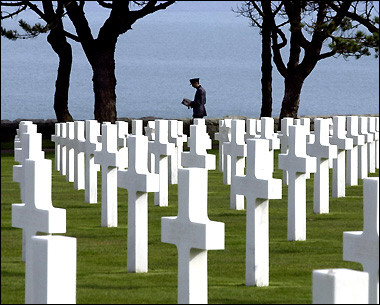


The Maniac

.
"It is true that some speak lightly and loosely of insanity as in itself attractive. But a moment's thought will show that if disease is beautiful, it is generally some one else's disease. A blind man may be picturesque; but it requires two eyes to see the picture. And similarly even the wildest poetry of insanity can only be enjoyed by the sane. To the insane man his insanity is quite prosaic, because it is quite true. A man who thinks himself a chicken is to himself as ordinary as a chicken. A man who thinks he is a bit of glass is to himself as dull as a bit of glass. It is the homogeneity of his mind which makes him dull, and which makes him mad. It is only because we see the irony of his idea that we think him even amusing; it is only because he does not see the irony of his idea that he is put in Hanwell at all.

In short, oddities only strike ordinary people. Oddities do not strike odd people. This is why ordinary people have a much more exciting time; while odd people are always complaining of the dulness of life. This is also why the new novels die so quickly, and why the old fairy tales endure for ever. The old fairy tale makes the hero a normal human boy; it is his adventures that are startling; they startle him because he is normal. But in the modern psychological novel the hero is abnormal; the centre is not central. Hence the fiercest adventures fail to affect him adequately, and the book is monotonous. You can make a story out of a hero among dragons; but not out of a dragon among dragons. The fairy tale discusses what a sane man will do in a mad world. The sober realistic novel of to-day discusses what an essential lunatic will do in a dull world.


Let us begin, then, with the mad-house; from this evil and fantastic inn let us set forth on our intellectual journey. Now, if we are to glance at the philosophy of sanity, the first thing to do in the matter is to blot out one big and common mistake. There is a notion adrift everywhere that imagination, especially mystical imagination, is dangerous to man's mental balance. Poets are commonly spoken of as psychologically unreliable; and generally there is a vague association between wreathing laurels in your hair and sticking straws in it. Facts and history utterly contradict this view. Most of the very great poets have been not only sane, but extremely business-like; and if Shakespeare ever really held horses, it was because he was much the safest man to hold them. Imagination does not breed insanity. Exactly what does breed insanity is reason. Poets do not go mad; but chess-players do. Mathematicians go mad, and cashiers; but creative artists very seldom. I am not, as will be seen, in any sense attacking logic: I only say that this danger does lie in logic, not in imagination. Artistic paternity is as wholesome as physical paternity.

Moreover, it is worthy of remark that when a poet really was morbid it was commonly because he had some weak spot of rationality on his brain. Poe, for instance, really was morbid; not because he was poetical, but because he was specially analytical. Even chess was too poetical for him; he disliked chess because it was full of knights and castles, like a poem. He avowedly preferred the black discs of draughts, because they were more like the mere black dots on a diagram. Perhaps the strongest case of all is this: that only one great English poet went mad, Cowper. And he was definitely driven mad by logic, by the ugly and alien logic of predestination. Poetry was not the disease, but the medicine; poetry partly kept him in health. He could sometimes forget the red and thirsty hell to which his hideous necessitarianism dragged him among the wide waters and the white flat lilies of the Ouse. He was damned by John Calvin; he was almost saved by John Gilpin. Everywhere we see that men do not go mad by dreaming. Critics are much madder than poets. Homer is complete and calm enough; it is his critics who tear him into extravagant tatters. Shakespeare is quite himself; it is only some of his critics who have discovered that he was somebody else. And though St. John the Evangelist saw many strange monsters in his vision, he saw no creature so wild as one of his own commentators.

The general fact is simple. Poetry is sane because it floats easily in an infinite sea; reason seeks to cross the infinite sea, and so make it finite. The result is mental exhaustion, like the physical exhaustion of Mr. Holbein. To accept everything is an exercise, to understand everything a strain. The poet only desires exaltation and expansion, a world to stretch himself in. The poet only asks to get his head into the heavens. It is the logician who seeks to get the heavens into his head. And it is his head that splits."


Excerpt from "Orthodoxy" by Gilbert K. Chesterton
Photo by Belinda E. S.